01 / Before
The Before Situation
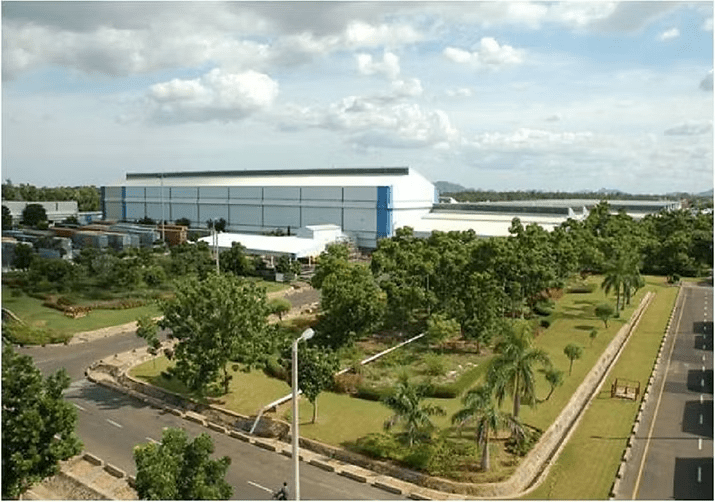
Ford India Engine Plant in Chharodi, Sanand, Gujarat was facing daily operational and environmental challenges due to unmanaged waste. Their kitchen operations generated 80 to 250 kg food waste daily, compounded by untracked garden waste from landscaped areas. Relying on third-party waste handlers led to:
Key Challenges:
- High disposal costs
- Odor issues and pest infestation
- Increased carbon footprint from transportation
- No real-time control over hygiene or compliance
Despite their strong sustainability values, Ford needed a practical, in-premise waste solution that aligned with their ESG goals, cost-effectiveness standards, and operational efficiency.
02 / Trigger
The Trigger
The connection began when our business associate shared a proposal that resonated with Ford's environmental objectives. This initiated a site visit invitation on 23rd October 2024.
From the first meeting, it was clear-Ford was ready for innovation, but required proof of practicality and performance before proceeding. Their leadership team, including Mr. S. Venu Gopal and Mr. Santosh, prioritized both data-driven analysis and hands-on feasibility.
03 / Journey
The Journey
To build trust, we invited the Ford team for a live demonstration of our 250kg Fully Automatic Waste Composting Machine at an existing client's site. There, they:
- Witnessed 24-hour composting in real time
- Spoke with current users for honest feedback
- Verified ease of operations (just 15-20 minutes/day)
- Experienced the machine's odor control and hygiene management firsthand
We then submitted a detailed ROI and operational proposal the very next day. Thanks to Ford's proactive mindset and our well-documented proof of performance, the deal closed smoothly, not just as a transaction, but as a partnership for long-term sustainability.
04 / Results
The Results
Operational Wins
- Eliminated third-party disposal costs
- Resolved pest and odor challenges permanently
- Improved hygiene across food waste zones
- Generated high-quality compost for internal landscaping
- Seamless alignment with ESG and audit requirements
Environmental Impact
- Fully compliant with SWM 2016, ISO, and ESG standards
- Reduced transportation = lower carbon emissions
- Zero waste sent to landfills
- Full circular use of food and garden waste on-premise
Post-Installation Support
- Ongoing maintenance and service audits
- Technical assistance and performance checks
- Relationship driven by trust, not just service contractsaste on-premise
05 / Conclusion
Conclusion
This case study with Ford India Engine Plant Pvt. Ltd. is a perfect example of what happens when sustainability meets action. By embracing a forward-thinking solution, Ford not only saved costs but also became a model for sustainable industry practices in India.
“This isn’t just waste management—it’s environmental leadership on wheels.”