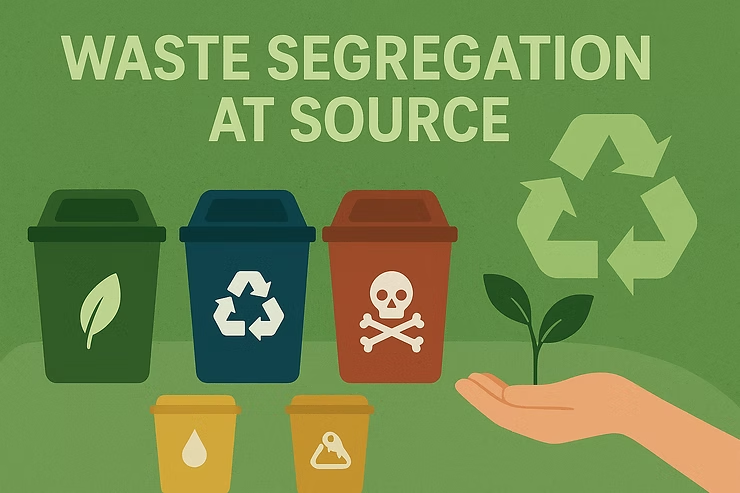
In today’s world of rising waste volumes and growing environmental concerns, waste segregation at source has become the foundation of sustainable waste management. It’s not just a regulatory requirement—it’s a responsibility every industry, business, and residential community must adopt.
At Samkiti Environment & Engineering Solutions Pvt. Ltd., we believe that waste segregation is the first step towards turning waste into a valuable resource. Whether you run a hotel, restaurant, pharma unit, cement factory, rubber industry, or residential society, proper segregation ensures that waste is managed efficiently, economically, and environmentally.
Why Waste Segregation at Source is Important
Reduces Environmental Pollution
When waste is mixed, it becomes difficult to process, leading to landfill overflows and toxic emissions. Segregating waste at the source allows compostables, recyclables, and non-recyclables to be treated differently, minimizing pollution.
Enables Efficient Recycling & Composting
Wet (organic) waste can be composted using Samkiti’s automatic waste composting machines, while dry (recyclable) waste can be sent for reuse. This process supports the circular economy and reduces landfill dependency.
Lowers Waste Management Costs
Segregation reduces collection, transportation, and disposal costs, helping industries save significant operational expenses.
Supports Compliance with Government Regulations
Industries in India must comply with the Solid Waste Management Rules, 2016 and Pollution Control Board norms. Proper segregation ensures legal compliance and prevents penalties.
Promotes a Sustainable Brand Image
Eco-conscious practices strengthen your brand’s image among clients, customers, and employees—a major advantage for hotels, restaurants, and hospitality brands.
Types of Waste You Should Segregate
| Type of Waste | Examples | Disposal / Processing Method |
|---|---|---|
| Wet Waste (Biodegradable) | Food waste, kitchen scraps, vegetable peels | Composting using Automatic Waste Composting Machines |
| Dry Waste (Recyclable) | Paper, plastic, metal, glass | Recycled or reused |
| Hazardous Waste | Chemicals, pharma residues, paints, e-waste | Dispose as per regulatory standards |
| Inert Waste | Construction debris, cement dust | Landfilled safely |
| Biomedical Waste | Used gloves, masks (for pharma/hospitals) | Incineration or authorized disposal |
How to Implement Waste Segregation in Your Facility
Step 1: Conduct a Waste Audit
Identify how much and what type of waste your facility generates daily.
Step 2: Provide Clearly Marked Bins
Use color-coded bins—Green for Wet, Blue for Dry, and Red for Hazardous—across your premises.
Step 3: Train Staff and Residents
Educate employees, housekeeping, and residents on what belongs in each bin.
Step 4: Install an On-Site Composting Solution
For wet waste, install a Samkiti Automatic Organic Waste Converter (OWC) suitable for your daily waste volume.
Step 5: Partner with Authorized Recyclers
For dry and hazardous waste, connect with authorized recyclers or disposal partners.
Samkiti’s Automatic Waste Composting Machines
At Samkiti, we design and manufacture fully automatic waste composting machines to handle organic waste volumes from 10 kg/day to above 2 tons/day. Each model is ideal for specific industries:
| Industry | Recommended Machine Capacity | Benefits |
|---|---|---|
| Hotels & Restaurants | 50 kg – 250 kg/day | On-site composting of food waste, odor-free operation, minimal manpower |
| Pharma & Chemical Industries | 350 kg – 500 kg/day | Safe organic waste treatment, reduces contamination risk |
| Cement & Rubber Plants | 1500 kg – 2 tons/day | Handles mixed organic-industrial waste, robust steel design |
| Residential Societies & Townships | 100 kg – 250 kg/day | Converts kitchen waste into manure for landscaping |
| Corporate & Educational Campuses | 10 kg – 50 kg/day | Supports green campus initiatives, reduces waste disposal costs |
Our composting systems are odor-free, automatic, low-maintenance, and compliant with CPCB norms, ensuring a clean, green environment for your facility.
Explore our complete product range here: www.samkiti.com
Checklist: Is Your Facility Following These Segregation Best Practices?
- Separate wet and dry waste at source.
- Use color-coded bins with labels.
- Educate staff or residents.
- Compost organic waste on-site using Samkiti’s Automatic Composting Machine.
- Monitor segregation performance monthly.
- Collaborate with recyclers and compost users.
If you checked all these, you’re already a sustainability leader!
FAQs
Yes, residential communities can easily process kitchen and garden waste to produce nutrient-rich compost for gardens.
Organizations typically recover their investment within 12–24 months, thanks to savings on waste transportation, disposal, and fertilizer costs.
Learn More & References
If you want to explore more about waste segregation, sustainability, and compliance, here are some official resources you can refer to:
-
Government of India: Solid Waste Management Rules, 2016
Detailed framework defining segregation, collection, and treatment responsibilities for individuals and organizations.
-
CPCB Guidelines on Organic Waste Processing
Central Pollution Control Board (CPCB) guidelines on how to manage biodegradable waste safely and efficiently.
-
UNEP Circular Economy Initiatives
Learn how the United Nations Environment Programme promotes global waste reduction and resource efficiency.
Conclusion
Waste segregation at source is not an option—it’s a necessity. By separating waste before disposal, your organization can save costs, reduce pollution, and create a measurable impact on sustainability.
With Samkiti’s waste composting technology, you can easily manage your organic waste while contributing to a greener future for India.
Together, let’s turn waste into wealth.