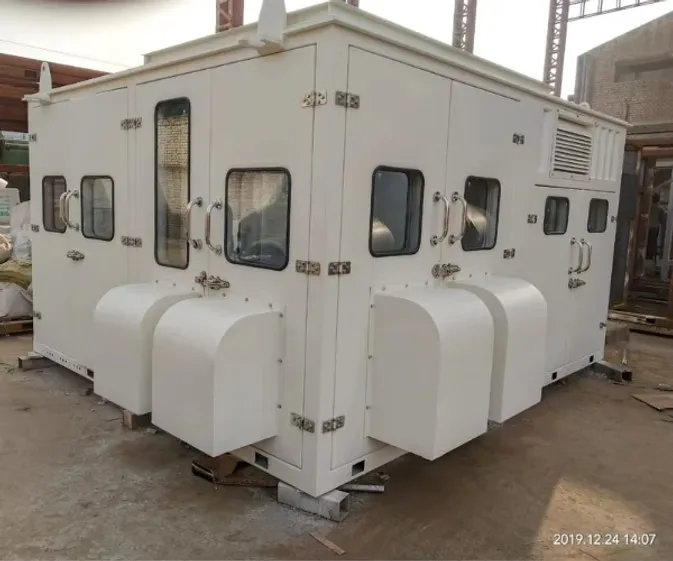
Individual Unit Acoustic Enclosure
To sound proof single unit or single machineries like DG Set, Boilers, Compressors or likewise.
As per the CPCB Norms in Industries Sound level in plant area or factory area should be less than 75 dbA More Precisely In Day time it should less than 75 dbA and in night time it should be less than 70 dbA. But in plant area where heavy machineries are in place, the Sound level we generally found between 110 to 120 dbA, which is always at Danger Zone for the human beings who are working close to it.
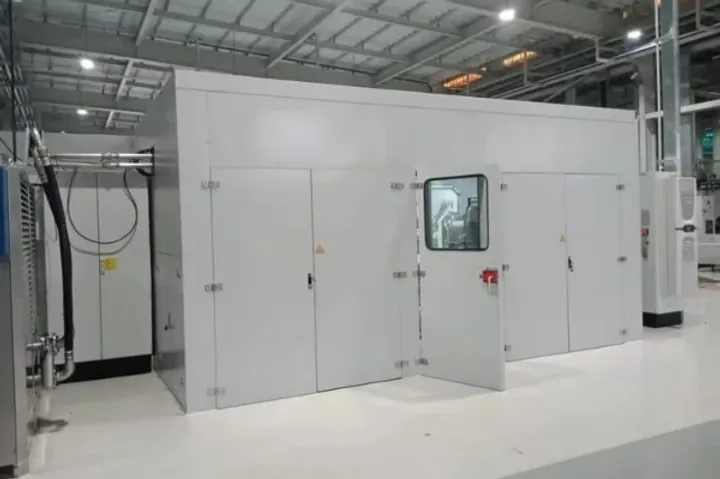
 Outdoor generator enclosure for reducing the constant frequencies from this equipment Warehouse office space for reducing equipment noise to meet office standards of 50 decibels or lower Industrial control rooms providing operators a noise safe environment for the duration of the work shift Transformer enclosures minimizing equipment hum and high-frequency sounds Compressor rooms to limit noise levels getting past the sound enclosure Ventilation equipment for large residential areas, commercial complexes, health care facilities, and warehouses Quiet zones for any construction project or business sector Permanent tinnitus and/or hearing loss. Create physical and psychological stress. Reduce productivity. Interfere with communication and concentration. Workplace accidents and injuries by making it difficult to hear warning signals.
The Solution Is Acoustic Enclosure Which Is Also Called As Sound Proofing Enclosure
Acoustic enclosures refer to closed engineered structures specially planned and built to reduce, minimize, or attenuate noise emitted by specific equipment or machinery.
To sound proof single unit or single machineries like DG Set, Boilers, Compressors or likewise.
To cover entire room where bunch of machineries are installed and there is no places to install individual Canopy.
Share your daily waste volume, location and operational requirement. Samkiti can help identify the right model, accessories and implementation approach.
"Waste is not waste until we waste it. At Samkiti, we see every kilogram of organic waste as an opportunity — to create compost, generate energy, and build a cleaner, greener tomorrow for all."